The Hidden Mechanics Behind Customized Reward Programs in Digital Poker Platforms
Written by Xander Hansen · Oct 21, 2026
The Hidden Mechanics Behind Customized Reward Programs in Digital Poker Platforms
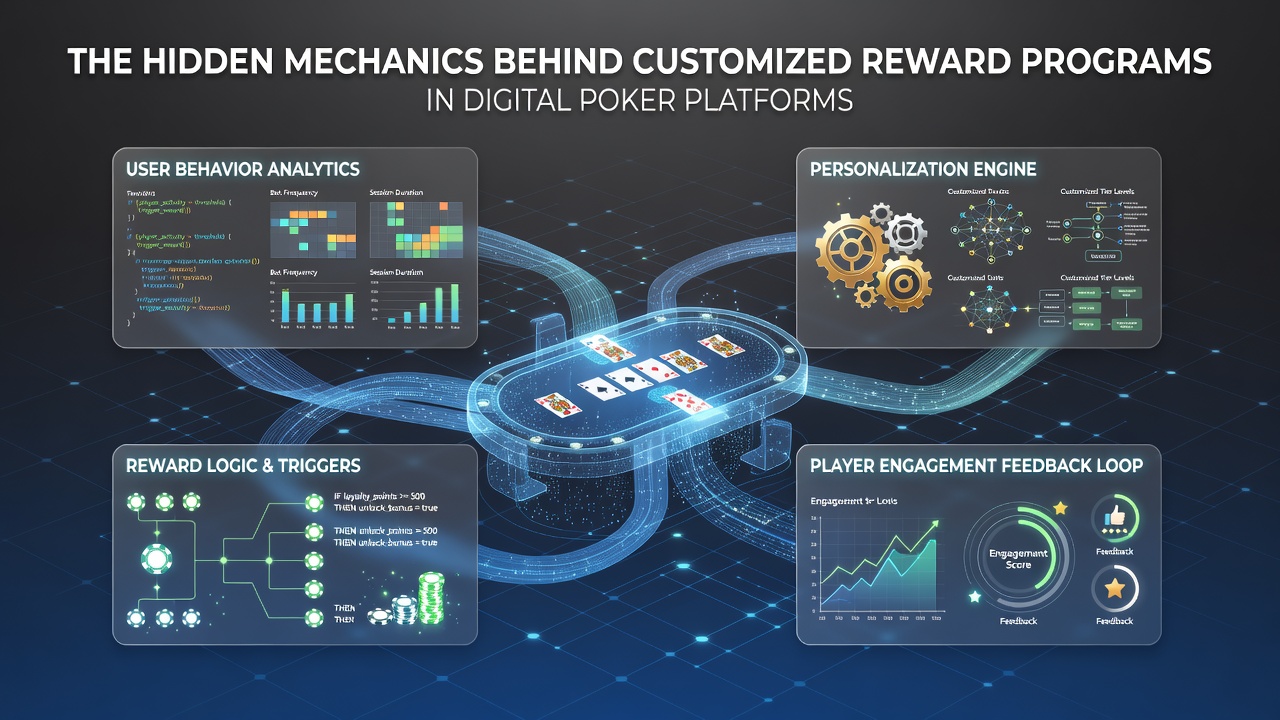
Digital poker platforms rely on layered backend systems to deliver personalized rewards that adjust based on individual player patterns rather than fixed formulas. These systems track metrics such as hand frequency, session duration, and game type preferences to segment users into dynamic categories that shift over time. Research indicates that platforms process thousands of data points per player in real time, feeding them into decision trees that determine bonus multipliers, cashback percentages, and exclusive tournament entries.
Player Segmentation Through Behavioral Analytics
Platforms divide users into cohorts using clustering algorithms that group similar activity profiles together. One common approach applies k-means clustering to separate recreational players from high-volume grinders, while another layer incorporates time-based variables like peak login hours and preferred stake levels. Observers note that this segmentation updates nightly, allowing reward offers to reflect recent changes in behavior rather than historical averages alone. Data from industry reports shows that such adjustments occur across major networks serving players in North America, Europe, and Asia-Pacific regions during the same operational cycle.
Algorithmic Adjustment of Reward Parameters
Once a player enters a segment, rule-based engines apply conditional logic to scale rewards. For instance, a system might increase rakeback rates when a player exceeds a weekly volume threshold, yet simultaneously reduce them if activity drops below a rolling average calculated over the prior 30 days. These engines combine linear regression models with decision rules that account for external factors such as platform traffic levels. Studies from academic research centers have documented how these models minimize payout volatility while maintaining engagement across diverse user bases, particularly evident in platform updates rolled out ahead of October 2026 seasonal promotions.
Integration of Machine Learning for Dynamic Offers
Machine learning models refine reward customization by predicting future player value and testing offer variations through controlled experiments. Platforms run A/B tests on subsets of users to measure response rates to different bonus structures, then feed those outcomes back into the model for refinement. This process allows offers to evolve without manual intervention from operators. Figures from trade association reports reveal that such testing cycles often complete within 48 hours, enabling rapid iteration across thousands of active accounts simultaneously.
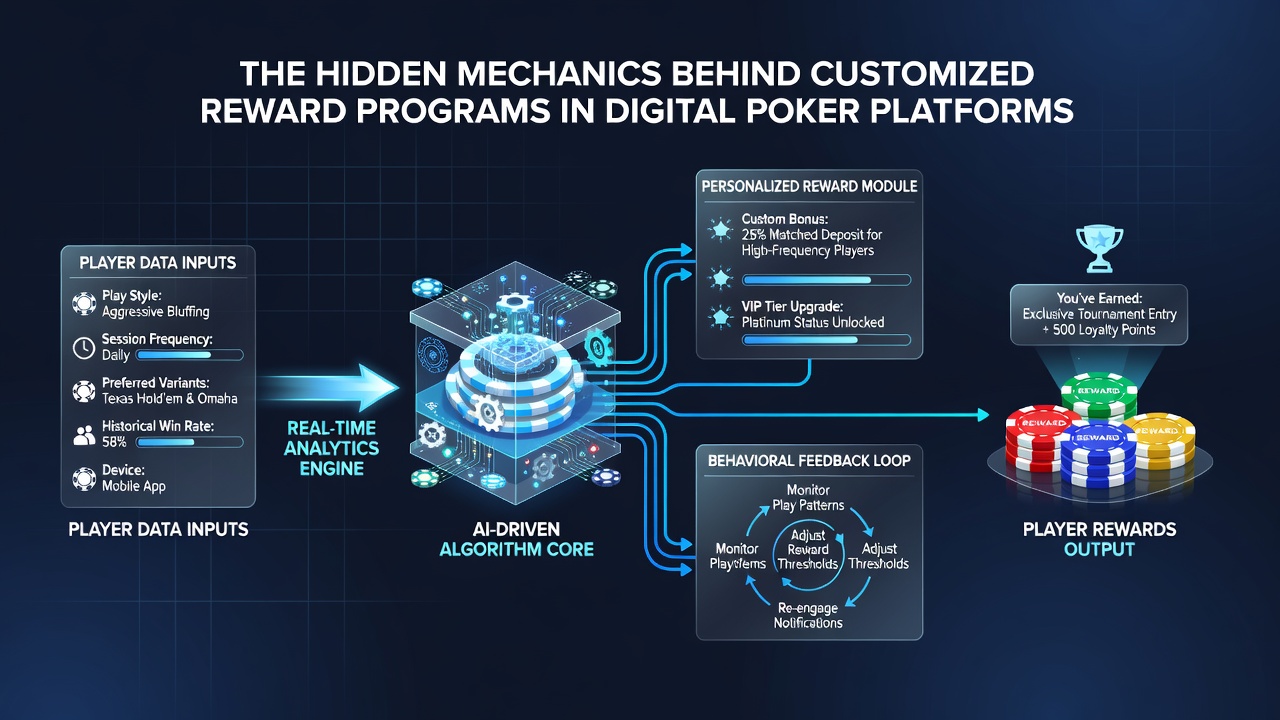
What's interesting is how these models incorporate feedback loops that weigh both positive and negative signals. A player who redeems a tournament ticket but fails to cash might receive a follow-up offer calibrated to restore momentum, whereas consistent cashers could see their offers shift toward larger but less frequent incentives. According to findings published by the University of Nevada's gaming research division, these loops reduce churn rates by aligning incentives more closely with observed retention curves.
Backend Infrastructure Supporting Real-Time Customization
The technical stack behind these programs typically includes distributed databases that store player profiles alongside event streams processed through Apache Kafka or similar frameworks. This architecture lets platforms calculate reward eligibility within milliseconds of a qualifying action such as completing a cash game session. Multiple microservices handle different components: one manages point accrual, another evaluates tier progression, and a third generates personalized notifications. Industry analyses indicate that major platforms maintain redundant systems across data centers to ensure these calculations remain available during peak traffic periods.
Take one operator that expanded its loyalty engine in 2025. The upgrade introduced a hybrid model combining rule sets with reinforcement learning agents that optimize long-term player lifetime value. External audits of similar systems confirm that such hybrids produce measurable improvements in offer acceptance rates compared with static tier programs alone. And because the models retrain weekly on fresh data, they capture shifts in player preferences that emerge during extended play periods.
Cross-Platform Data Sharing and Reward Portability
Some networks operate shared loyalty ecosystems where activity on one poker skin contributes to rewards available across affiliated sites. These arrangements rely on centralized ledgers that reconcile points and benefits in near real time. Operators participating in such networks must align their segmentation rules to maintain consistency, yet each platform retains autonomy over its specific offer catalog. Reports from the European Gaming and Betting Association document how these shared systems handle millions of transactions monthly while preserving distinct brand identities.
Conclusion
Customized reward programs in digital poker platforms operate through interconnected layers of data collection, algorithmic processing, and continuous model refinement. The mechanics remain largely invisible to users, yet they determine the timing, value, and form of every personalized incentive delivered. As platforms continue to refine these systems through ongoing testing and infrastructure upgrades, the underlying processes grow more precise at matching rewards to individual patterns. Observers tracking developments through October 2026 note that these hidden mechanics represent core operational components rather than optional features across the sector.